 Book now
 What to see at the Chichu Art Museum: three artists and Ando's light
Monet's late Water Lilies, three works by James Turrell and Walter De Maria's sphere, in a museum lit by the sky.
The Chichu Art Museum holds very few works, and that is the point. Claude Monet, James Turrell and Walter De Maria each have rooms made for them, and Tadao Ando's concrete building around them is designed to bring in daylight from above, so that the works and the spaces change through the day and the year. There is no photography past reception, so the museum is something you can only know by going. This guide describes what you will find inside in words: the five Monet paintings and their room, Turrell's three pieces from 1968 to 2004, De Maria's Time/Timeless/No Time, the architecture itself, the garden planted after Giverny and the café over the sea, with advice on when to go and how to pace your visit.
A museum in the earth
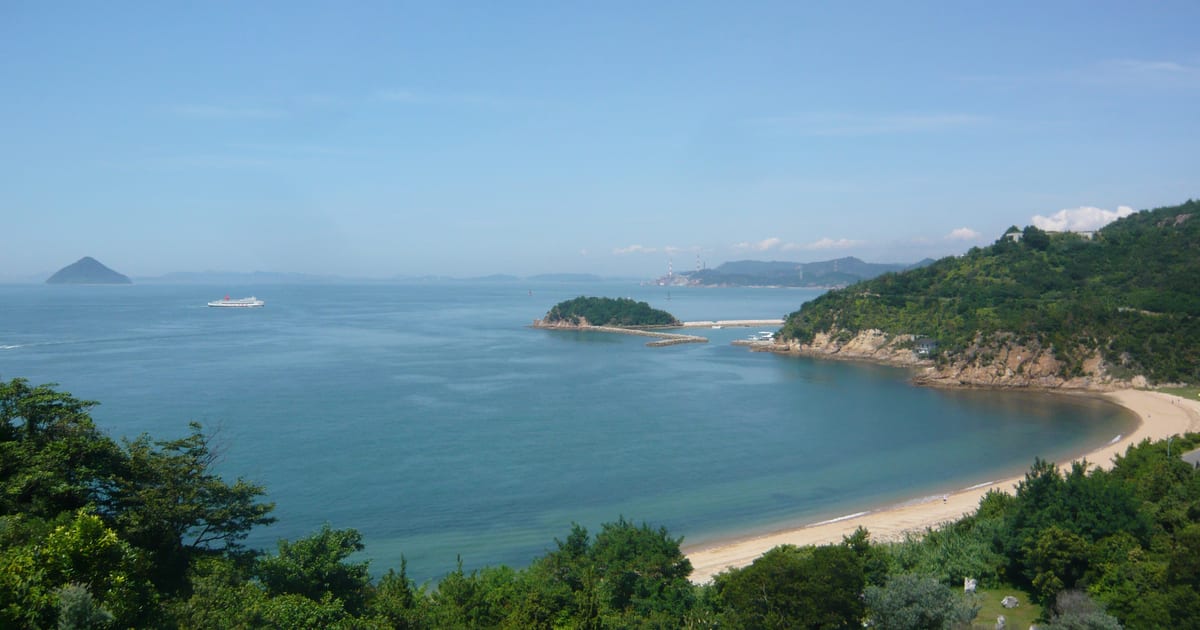
Chichu means “in the earth”. Tadao Ando built the museum almost entirely underground on the south of Naoshima so that it would not alter the coastline of the Seto Inland Sea. It opened in 2004. From outside you see little more than concrete walls and openings set into the hill.
Ando reduced the design to the minimum, using only concrete, steel, glass and wood. Despite being mostly below ground, the museum lets in an abundance of natural light, and that light changes how the works and the spaces look through the day and across the seasons.
The museum describes itself as one very large site-specific work. The artists and the architect developed it together, bouncing ideas off each other, so the rooms and the art were made for one another.
Claude Monet's Water Lilies
Five paintings from Monet's Water Lilies series hang at Chichu, all from his later years. They include Water-Lily Pond of about 1915–26, Water Lilies, Cluster of Grass and Water Lilies, both of 1914–17, Water-Lily Pond of 1917–19, and Water Lilies, Reflections of Weeping Willows of 1916–19.
The room was designed for them. Its size, its design and its materials were chosen to unite the paintings with the space, and they are seen under natural light. Some spaces at Chichu ask you to take off your shoes before entering.
Monet moved to Giverny in 1883 and made a water garden there, with a lily pond that he kept painting until the end of his life. He died at Giverny in 1926, aged 86. At Chichu you see the late canvases where the pond, its reflections and the light on the water became almost the whole subject.
James Turrell: three works, one career
Light itself is the medium in James Turrell's art, and the museum chose three works that span his career. Afrum, Pale Blue dates from 1968, Open Field from 2000 and Open Sky from 2004, the year the museum opened.
Open Sky is a room whose ceiling opens to the sky, and you are exposed to the weather through the opening. You can see it at any time during opening hours. On Fridays and Saturdays it is also the setting for the Night Program, a 45-minute seated viewing at sunset for 30 people.
Turrell was born in Los Angeles in 1943 and studied perceptual psychology and mathematics before turning to art. His Roden Crater project in Arizona has been under way since 1979, and Naoshima also has his Backside of the Moon, from 1999.
Walter De Maria: Time/Timeless/No Time
Walter De Maria's work at Chichu is a whole room. Time/Timeless/No Time, made in 2004, contains a sphere 2.2 metres in diameter and 27 gilded wooden geometric forms. The materials include granite, mahogany, gold leaf and concrete.
Daylight comes in from the ceiling, and the room's illumination changes dramatically with the hour. A morning visit and a late-afternoon visit show you the same sphere in quite different light.
De Maria, born in 1935 in Albany, California, studied history and art at Berkeley and died in 2013. He is known for large works tied to place and time, among them The Lightning Field in New Mexico and The New York Earth Room. Naoshima also has his Seen/Unseen Known/Unknown of 2000.
Tadao Ando's architecture
Tadao Ando, born in Osaka in 1941, founded his practice in 1969 and received the Pritzker Architecture Prize in 1995. His other buildings include the Church of Light in Osaka and the Modern Art Museum of Fort Worth in Texas. On Naoshima he also designed the Benesse House Museum, opened in 1992.
At Chichu he made a building that is non-monumental yet intensely architectural. You move between rooms through concrete passages and open courts, and the sky appears in unexpected places. Notice how each artist's room is lit differently, and how your eyes adjust as you pass from one to the next.
Because there is so little to look at besides the art and the light, the architecture becomes part of the visit rather than a container for it.
Why there are no photographs
Photography is allowed at Chichu only up to the reception area. Past that point there are no photos, no video and no sketching, and fountain pens and ink are not allowed. Phones are not used inside.
It is one of the reasons the museum feels so different from most. People look rather than record, and the rooms stay quiet. It is also why you will not find pictures of the rooms on this site: they cannot be taken, and the works are best met in person.
If you want something to take home, the Chichu Store sells the museum's own books and photography collections.
The Chichu Garden and the café
The Chichu Garden is planted with nearly 200 kinds of flowers and trees similar to those Monet grew at Giverny. Through the year you can see water lilies like those he painted, along with willows, irises and other plants, so the garden lets you feel the nature Monet was trying to capture.
Inside the museum, the Chichu Café looks out over the Inland Sea and has an open patio. It opens from 10:30 to 16:45, with last orders at 16:30, and has 36 seats. You use it after you have entered at your reserved time.
It is a good place to end your visit, watching the sea after the stillness of the rooms.
When to go, and how long to stay
Because the rooms are lit by daylight, the time of day changes what you see. Midday light and late-afternoon light give the rooms a different character, and a grey day is different again. There is no wrong time, only different ones.
Plan on at least an hour inside, more if you want to return to a room or sit in the café. The museum opens from 10:00 to 17:00, with last admission at 16:00, and closes on Mondays except national holidays.
If you want to see Open Sky at dusk, book the Night Program. It includes museum entry that day, so you can see Monet and De Maria in the afternoon and then return to Turrell at sunset.
Monet before Chichu
Monet, born in Paris in 1840, is remembered for Impression, Sunrise, the Haystacks and the Rouen Cathedral series. From 1883 he lived at Giverny, where he made a water garden with a lily pond and painted it again and again until his last years.
On 17 May 1927, the year after his death, the Orangerie Museum in Paris began showing his great Water Lilies paintings. Chichu's room belongs to that idea of an environment built around the late works, rather than a gallery wall with pictures on it.
Seeing the canvases at Chichu and then walking in the Chichu Garden, planted with species like those at Giverny, gives you both halves of the story: the pond Monet grew, and what he made of it.
How to pace your visit
There are only a few rooms, so it is tempting to move quickly. Resist it. Sit where you can, let your eyes adjust as you pass from bright courts to softer rooms, and go back to a room if the sky has changed since you first entered.
Plan on at least an hour inside. If you can, leave time for the café afterwards, where you can look at the sea and let the visit settle before the shuttle and the ferry.
If you are travelling with children, the absence of labels and screens can be a surprise. Talk to them about what changes in each room as the light moves; it turns the visit into a game of noticing.
Ando elsewhere on Naoshima
Chichu is one of several Tadao Ando buildings on the island. The free shuttle that brings you to the museum also stops at the Benesse House Museum, opened in 1992, and at the Lee Ufan Museum, which Ando designed for the work of Lee Ufan.
In Honmura you will find the ANDO MUSEUM, and the Naoshima New Museum of Art is another Ando building on the island. Each keeps its own hours, tickets and closures, so check them with the operator before you go.
A museum of few works
Chichu shows three artists and one building, permanently. It asks you to spend time rather than cover ground, and its rooms reward a slow second look more than a quick first one.
Some visitors arrive expecting a large collection and are surprised by how few works there are. If you want breadth, Naoshima's other museums and the outdoor works along the Benesse Art Site road give you more to see in the same day. If you want depth, Chichu gives you an hour or more with a handful of rooms that change as you watch them.
That focus is also why the museum controls numbers so tightly, with 15-minute entry slots and a limit of eight tickets per slot for any one party.
Booking your visit
Every visit is timed in 15-minute slots, and tickets for each month go on sale at 10:00 Japan time on the second Friday of the month two months before. Children aged 15 and under enter free by day but need a reservation, which we add at no charge.
We book your slot on the museum's official system and email your e-ticket. If your date is sold out or not yet released, hold it with us and we book it when we can, before asking for payment.
Frequently asked
How many Monet paintings are at Chichu?
Five, all from the Water Lilies series of his later years, shown in a room designed for them under natural light.
Which Turrell works are there?
Afrum, Pale Blue (1968), Open Field (2000) and Open Sky (2004).
Can I take photographs?
Only up to reception. No photos, video or sketching inside.
Is the garden part of the visit?
The Chichu Garden belongs to the museum and is planted after Monet's garden at Giverny, with water lilies, willows and irises.
How long should I spend inside?
Plan on at least an hour, more if you want the café.
Do I need to take off my shoes?
In some rooms, yes. Shoes that slip on and off are easiest.
Who designed the museum?
Tadao Ando, the Osaka-born architect who won the Pritzker Prize in 1995. It opened in 2004, built almost entirely underground.